I got my Yashica Mat LM a few weeks ago, and my fascination with medium format hasn’t stopped growing. Those giant negatives are addictive, and their quality is unbeatable. My Yashica shoots 6×6, but the truth is, medium format has more to offer.
Then I remembered I was being a bit unfair to my old AGFA Billy I (which I talked about in this article) since on my final attempt, a small hole in the bellows ruined my shots.
I’m not usually the type who likes fixing things. I don’t have the patience or the hands for it. However, I thought, how hard could it be to fix a tiny little hole?
After going back and forth with Claude AI to figure out my options, I went the easy route and got some gaffer tape. I cut a small piece, carefully placed it on the bellows, and after shining a lamp on it, I saw it was perfectly sealed. A couple of extra tests pushing and pulling the bellows confirmed the trick had worked.
I took advantage of the delicious weather and went out to shoot a lot of Fomapan.
FOMAPAN 100 IN 6×9
Lately I’ve been experimenting with Fomapan. With this stock, I both shoot at box speed and push it to test the film’s limits.
This time I decided to test the film’s real capacity and shot it at ISO 80. It’s not always gloriously sunny in Mexico City, so I wanted to take advantage of it.
As always, my playground was the Centro Histórico (Historic Downtown), which was also decorated for Mexico’s Independence Day celebrations.
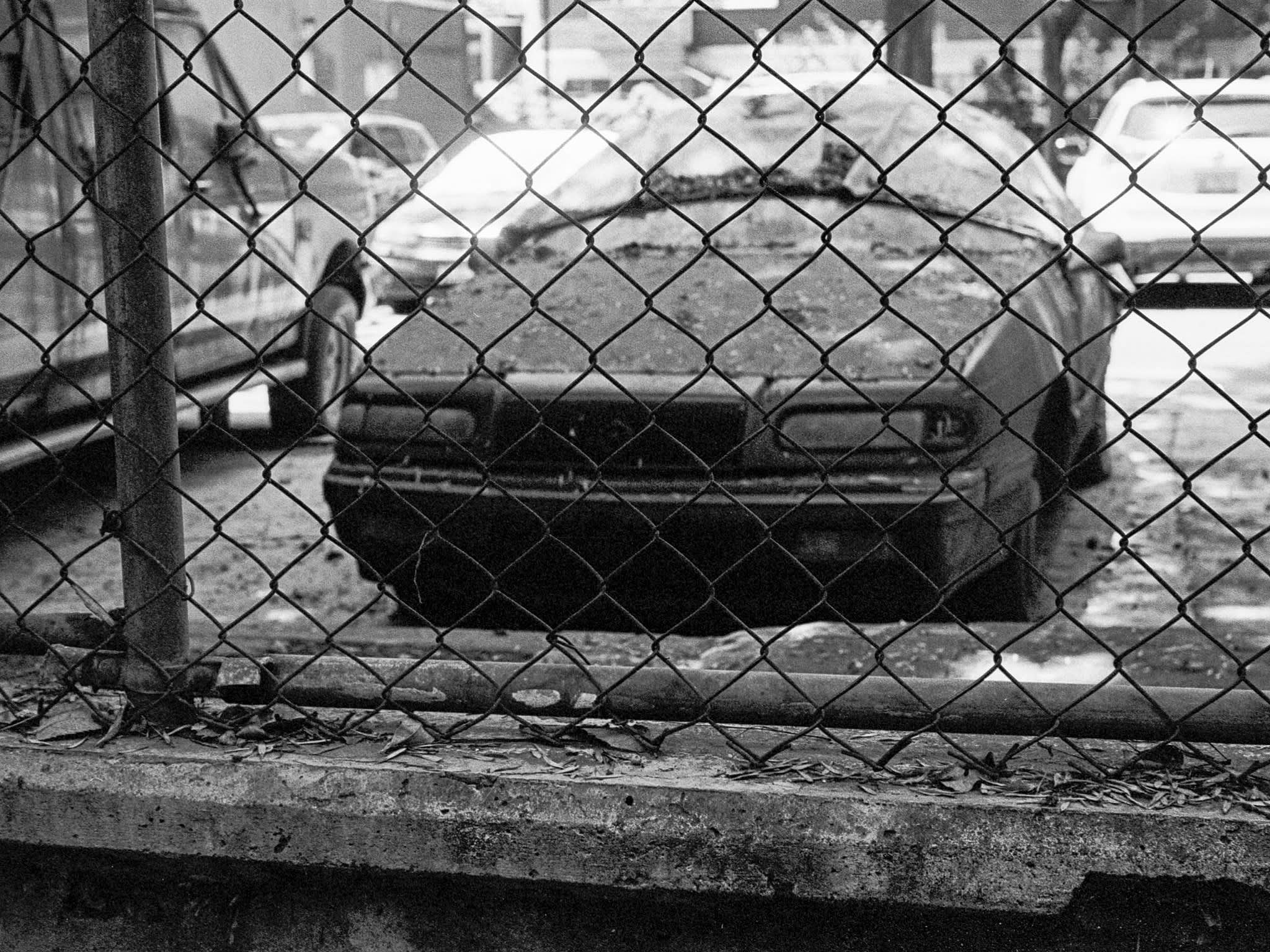
Without further ado, here are my favorites from the first roll.
Then I moved around a bit, tried to capture images in different conditions to see how it responds, and honestly, it didn’t disappoint at all.
TECHNICAL DETAILS
- Developer: Kodak HC-110 Dilution A | 6:30 min at 22-23 °C
- Scanning: DSLR by Mexicana Análoga LAB
STORY TIME
This year I started developing. And like a good engineer, I had to iterate.
I started with Monobath to lose the fear. Then I tried Ilfosol 3, but when I started pushing film, I realized it wasn’t the best option. Finally, I settled on Kodak HC-110 in Dilution B… or so I thought.
However, my software engineer nature made me chat with Claude AI from Anthropic (let’s say, OpenAI/ChatGPT’s rival) to explain that I couldn’t achieve those inky blacks I love so much.
To keep the story short, I should mention it recommended Dilution A, and since then I’ve been addicted to that formula (1:15 ratio).
I asked Claude for its source (because I genuinely didn’t know developers could be used in different formulas), and it told me one of its references is the book “Way Beyond Monochrome: Advanced Techniques for Traditional Black & White Photography.”
It looks fascinating, but it seems extremely technical and complex. I started reading it digitally, but I felt it was going to be pretty heavy going, and in the end, I just wanted my inky blacks, and the AI already did the work of understanding and recommending. I’m satisfied with the results; that’s the truth.
CONCLUSIONS (FOR NOW)
Although it’s simple to use, I tend to forget that I need to adjust the aperture frequently on this AGFA Billy I.
This camera doesn’t have a rangefinder. It has nothing. Everything is zone focusing. Thank goodness that despite this, since I almost always shoot at ƒ/8 or ƒ/11, the images are still usable. Anyway, sharpness is overrated.
6×9 negatives make me happy. Someday I’ll have images worth printing large, but as they say, practice makes perfect.
For now, I keep enjoying shooting medium format in both 6×6 and 6×9. 35 mm is still my everyday format (practicality rules), but every time I load up the AGFA Billy or the Yashica, I feel like I’m playing in another league, even if I’m doing the same type of pictures (mostly street).
And if you’re looking for brutally inky blacks, you know what to do: Fomapan 200 pushed to 800 with HC-110 Dilution A (post about it coming soon!).