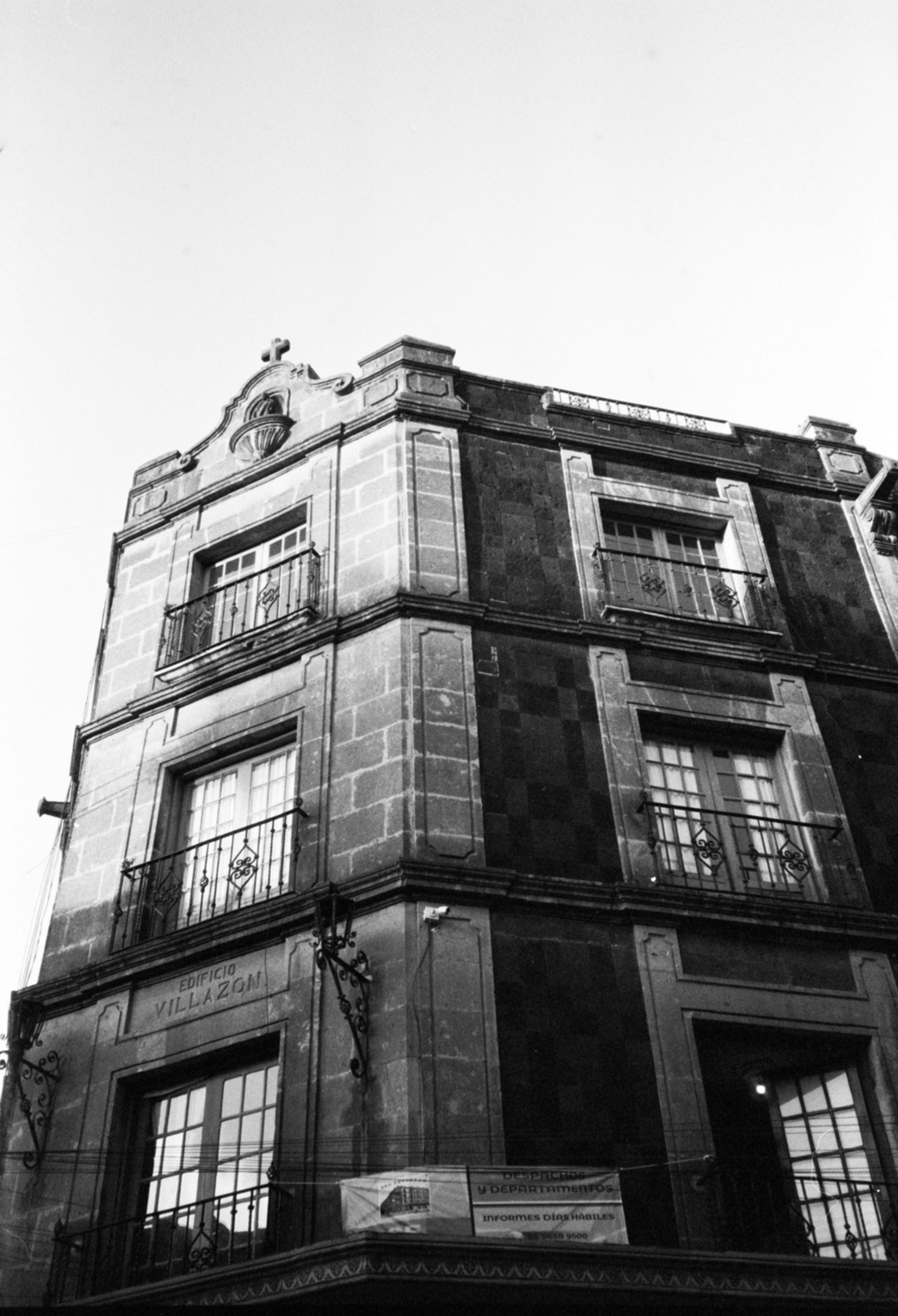
Weekly Exposure is back with issue #6 after a three-month hiatus. “Real life” tends to get in the way of the fun stuff, but nevertheless, here I am to share some recent learnings.
I’m a pusher by nature
When I’m using my Olympus XA3 point-and-shoot, I tend to set the ISO to 800 or 1600 if I know the lighting conditions are going to change a lot.
In many parts of the world, natural sunlight can change in a matter of seconds, and having a low ISO during a cloudy day might be a nightmare if you don’t want camera shake to appear in your pictures.
However, pushing film like a caveman, like I sometimes do, brings some problems to the table. Especially if you develop like a caveman, as I used to do, which means using the same recipe (overall) for any roll (just changing the time of development).
The result was often blown highlights and plenty of frustration trying to recover them in Lightroom.
“There has to be a better way”
Last year I got a Pira Darkroom Helper. It is a device that helps you to automate the agitation during the complete development cycle. I use it for development, stop bath, and fixer. I truly recommend getting one if you’re sick (like I was) of manual tank inversions/agitations.
Once I got comfortable with an “inky blacks” formula, I started using it over and over, with little variations on developing time for whatever roll and ISO rating I used.
However, I started noticing recently that I was almost always fighting my highlights. Some of them, beyond recovery.
The final nail in the coffin was a roll I would rather not mess with, and I ended up doing it. I thought, I’m clearly doing something wrong.
There has to be a better way.
So, I went to Google and started visiting blogs, old forums, and whatever helpful information I could get my hands on.
After a while, the problem was clear:
- Dilution is too concentrated.
- Agitation is “too aggressive.”
I was using a 1:15 dilution of HC-110 to get my “inky blacks” and having the Pira thing doing “too much” agitation. That was killing my highlights, especially when pushing.
Now, it was time to test the theory, as I would rather not develop another roll without having a new approach to preserve my highlights.
Enter Fomapan 200 Creative shot at 1600 (+3 stops).
How to develop this thing?
OK, back online. More research led me to a new approach, which was more conservative, promising to take care of my highlights. I had never tried Dilution H before, as I felt my negs were going to get plain and boring with no character in them. However, I didn’t want to risk another roll, so this recipe is what I did:
-
Dilution H (1+63)
- 300 ml (4.7 ml HC-110 + 295 ml water)
-
Temp: 23.2 °C (my room temp at that moment)
-
Developing Time: 12:45 min (with current temp in mind)
-
30s initial agitation
-
4s gentle agitation per min
-
no final agitation
Then,
- Stop Bath: 30s continuous agitation
- Fixer: 5 min, 5s initial and 12s every 30s
Moment of Truth
After the wetting agent, I was crossing my fingers to have at least something usable. My smile couldn’t get bigger once I pulled the roll from the tank and exposed it to the light: it was perfect!
I got super happy with the results. The pictures came up with the “dirty black and white” look I love so much (thanks to Daidō Moriyama for endless inspiration).
I left it to dry overnight. The next morning, with my Plustek ready, I started scanning them. Nodding at almost every frame.
Good stuff.
Show them pics!
As usual, my playground is Mexico City Downtown. This is where I practice street photography.
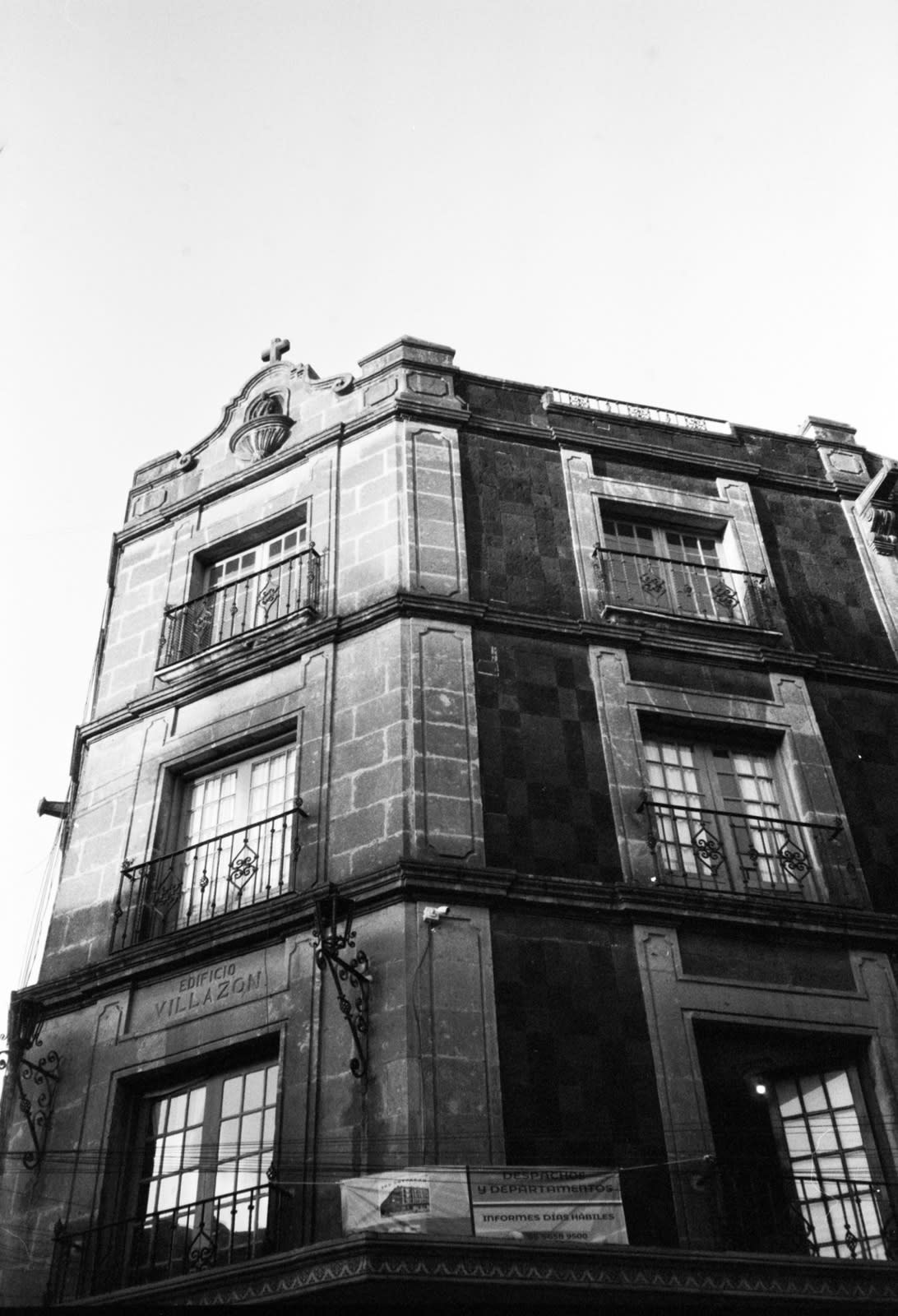
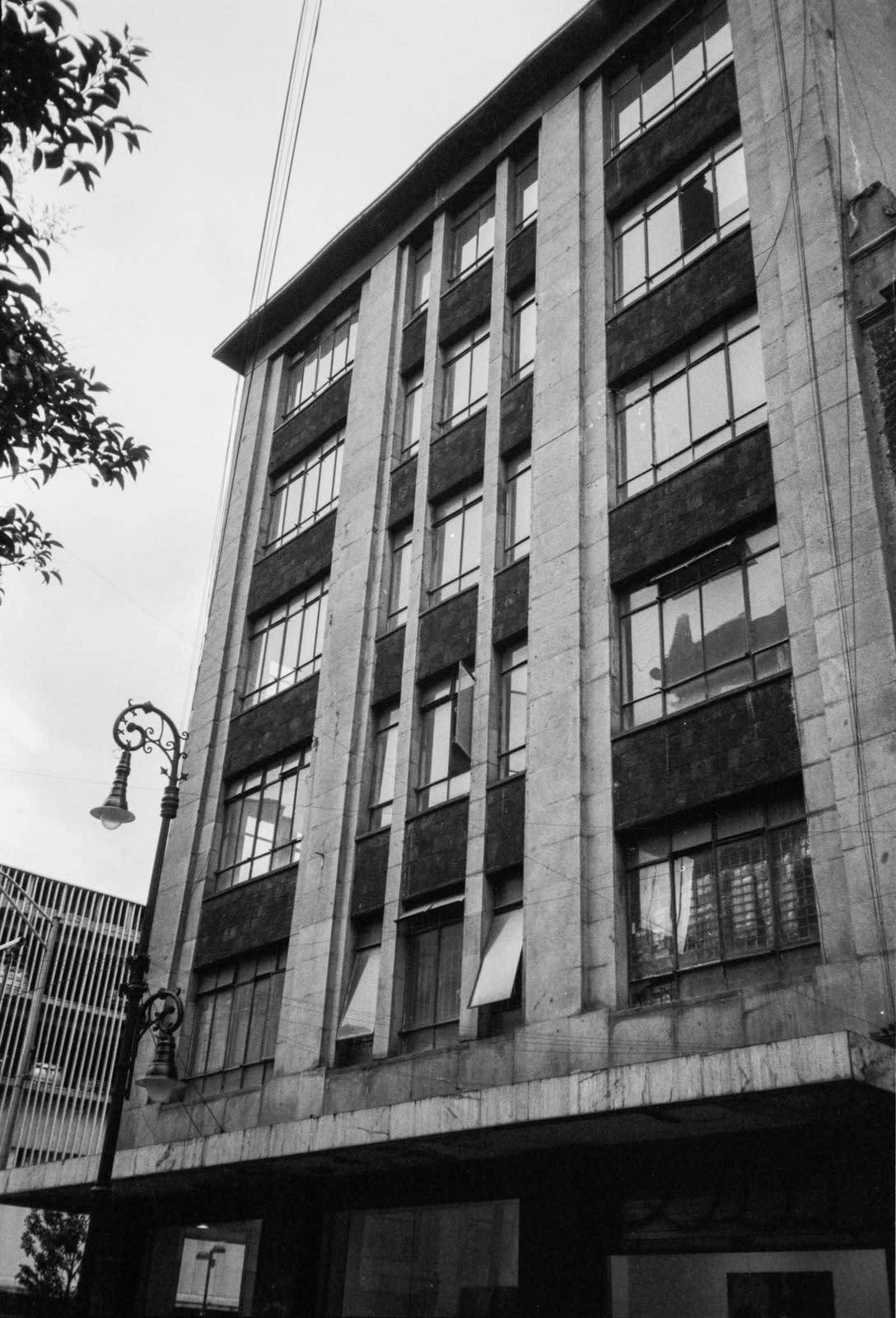
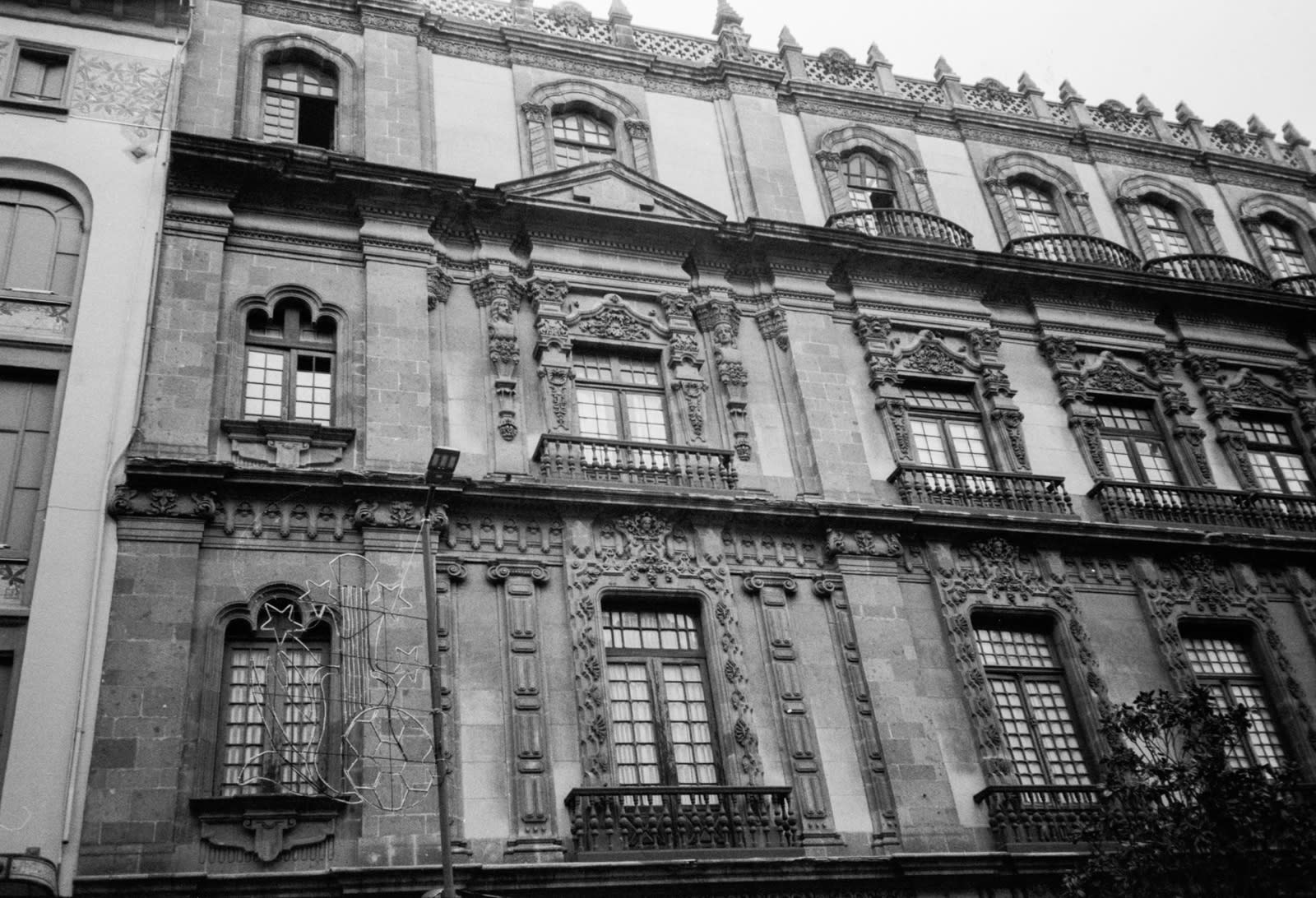
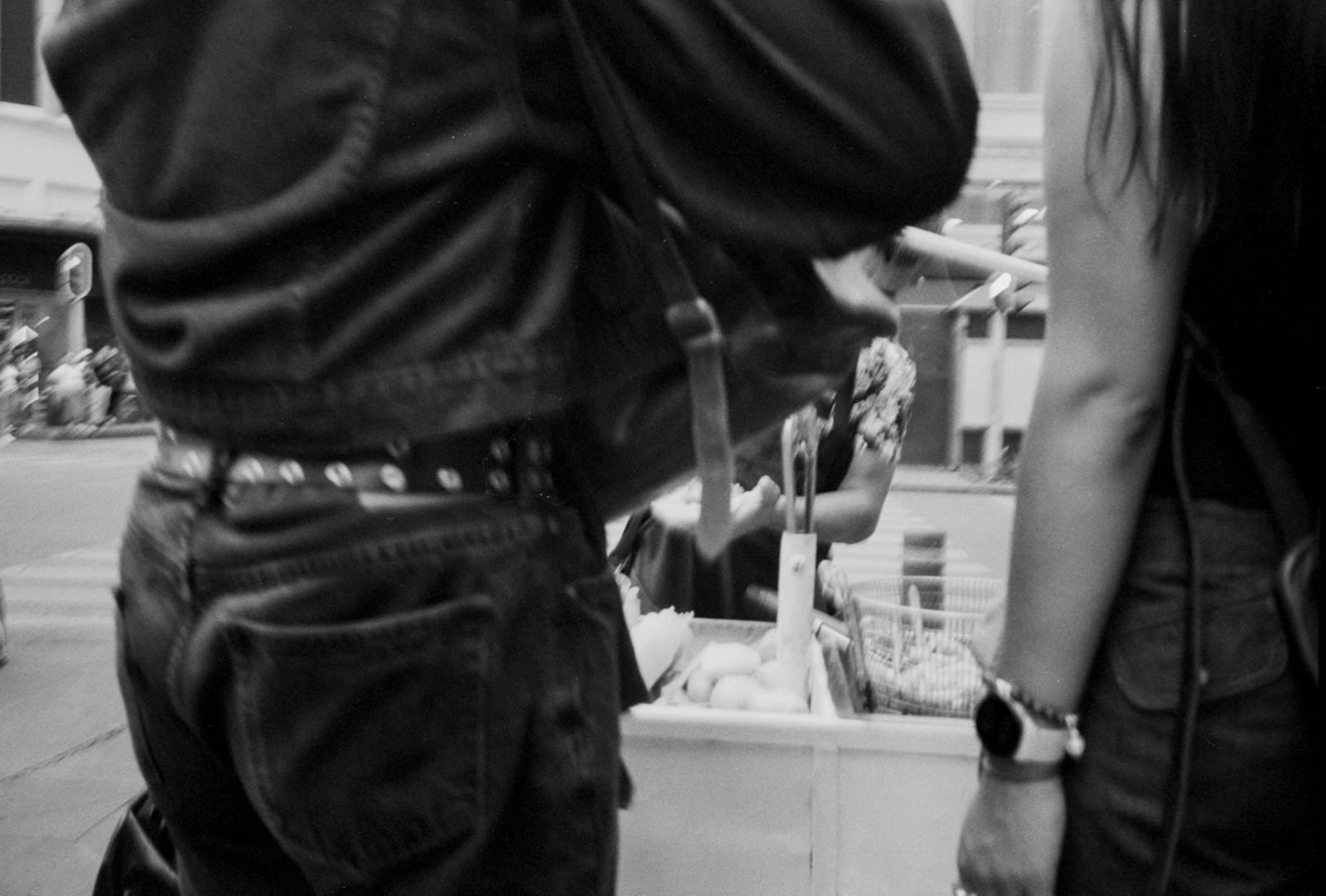
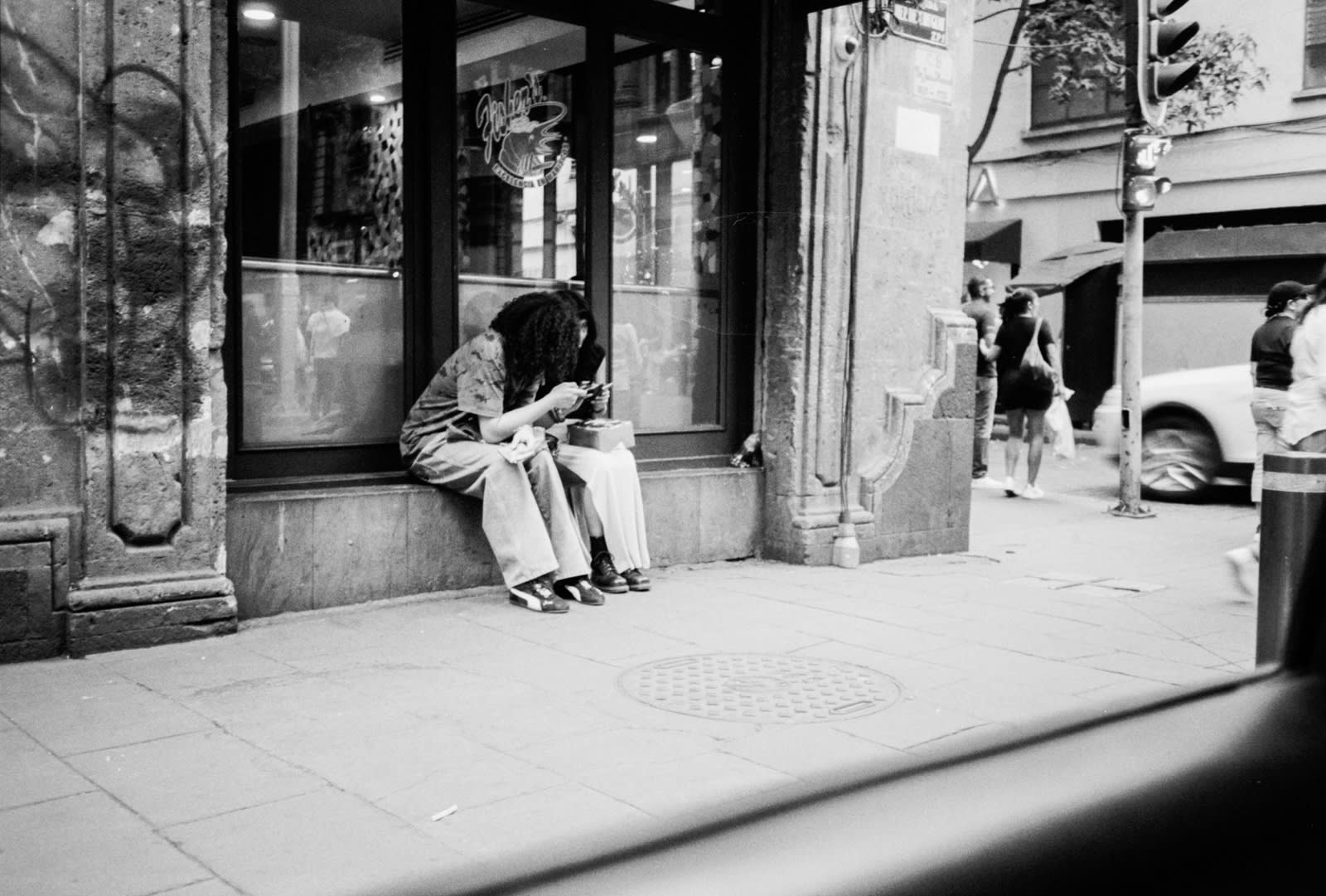
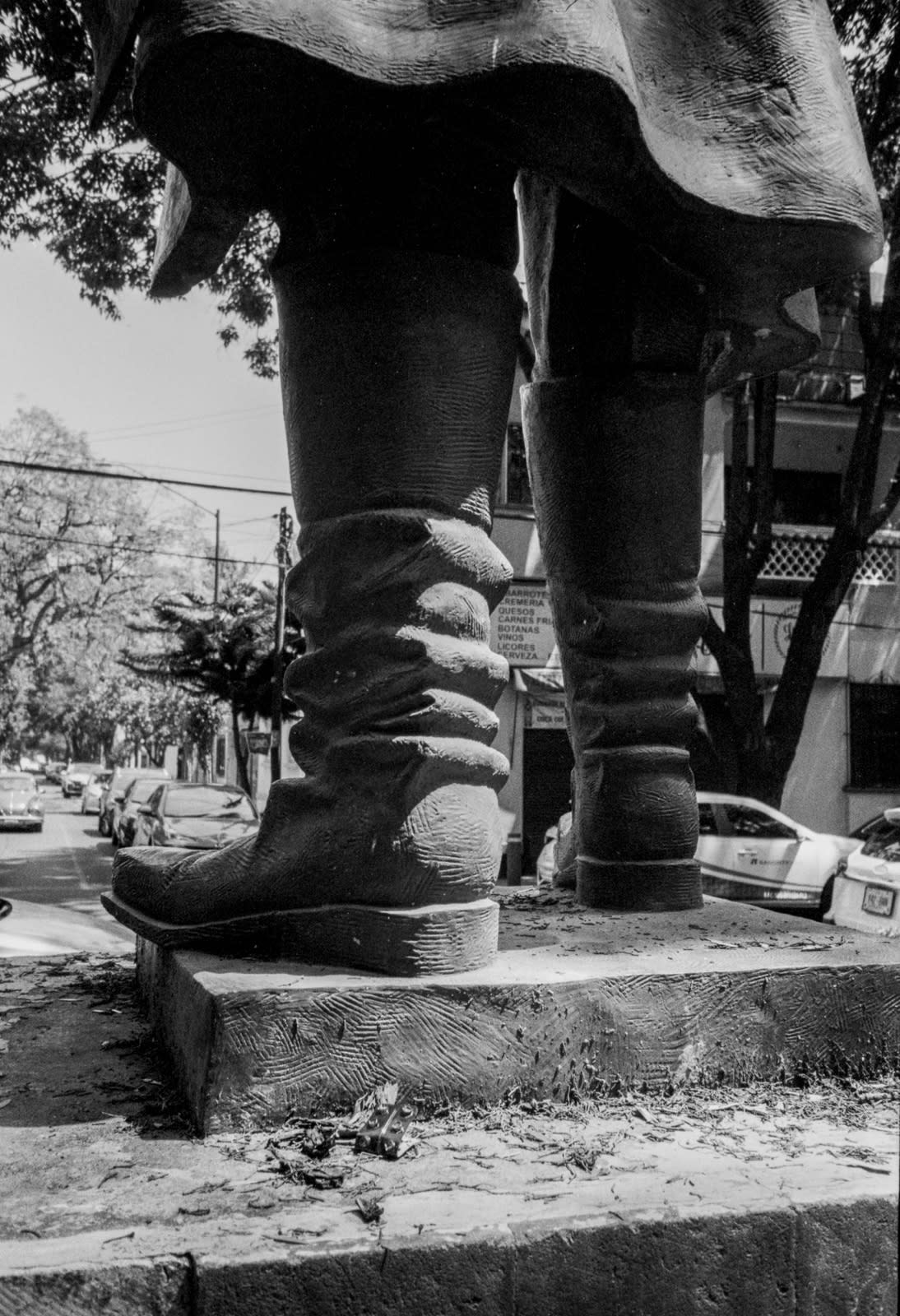
Here are some of them. They might not be fascinating, but I love the fact that from now on, I can shoot a humble Foma 200 to 1600 and get usable pictures (to my liking, of course).




Closing Thoughts
All of this came up from a really blown-out highlights roll that I shot a couple of weeks ago. I was like, Man, what am I doing wrong?
It wasn’t just the developing formula.
Furthermore, I was blindly trusting the Olympus XA3’s capabilities. Then, I learned that the max shutter speed was 1/500, and I was rating my film at 1600 on bright sunny days. Even at F16, it was too muckin fuch.
In my defense, I would say that I rated my film at 1600 because it was supposed to be a cloudy day, and suddenly, the sun came up as if I were on a beach. You know, a first-world problem.
I have plenty to learn, but I believe the most important lesson is that depending on the conditions it was shot and the result you actually want, your development recipe will vary.
No more caveman laziness.
See you in the next issue: Fuji Acros + Rodinal
As part of my new development experiments, I got a small bottle of Rodinal. I was intrigued by the acutance property it is famous for (among other things). It seems like acutance is how much sharpening you get by using that developer.
I’ll talk to you soon about this, as I couldn’t believe my eyes with the results.